
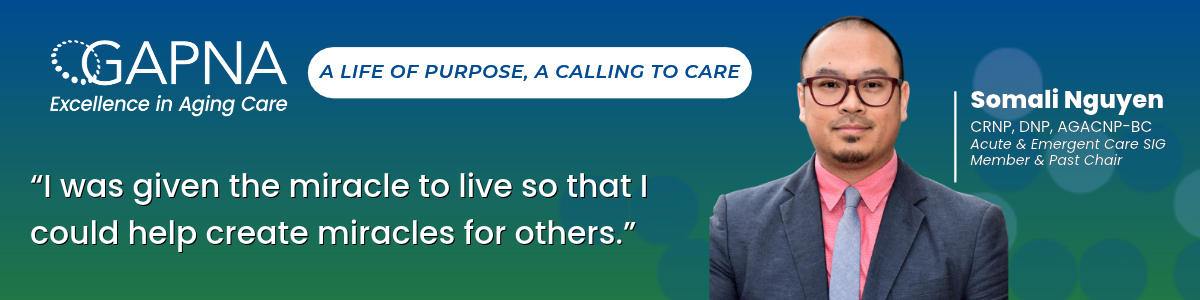
For National Nurse Practitioner Week, we're highlighting Somali Nguyen and his journey to becoming a nurse practitioner, his passion for caring for older adults, and the impact GAPNA has had on his professional growth and leadership.
A journey shaped by resilience, a calling to serve, and a commitment to improving the lives of older adults.
A Journey of Resilience and Purpose
My journey to becoming a nurse practitioner began long before I entered healthcare. After surviving the atrocities of the Khmer Rouge, my family was among the Cambodian families blessed to be sponsored to come to the United States and begin a new life. Growing up, I didn't understand the gift that was provided to me and my family, but as I got older, I finally understood and felt a responsibility to make that gift meaningful.
The pivotal moment that sparked my interest in healthcare occurred in the ninth grade when I incurred a serious injury during football practice. The compassion, expertise, and teamwork demonstrated by the healthcare professionals who cared for me left a lasting impression. As I explored different healthcare careers, I carefully considered several professions, but I ultimately felt called to nursing and advanced practice nursing. It became clear to me that God's plan was for me to become a nurse practitioner. I often tell myself that I was given the miracle to live so that I could help create miracles for others through healing, advocacy, and compassionate care.
When I walked through the doors of the University of Alabama at Birmingham School of Nursing, I knew I had found my calling. Many people spend their lives searching for their purpose, but I am blessed to know mine. Today, my work is meaningful because I have the opportunity to serve others with healing hands while bringing a unique perspective shaped by my Cambodian, Vietnamese, and American heritage. As both a clinician and educator, I strive to provide culturally informed care, mentor future healthcare professionals, and demonstrate to my students the profound impact they can have on the lives of their patients and communities.
The Privilege of Caring for Older Adults
Caring for older adults is incredibly rewarding because it allows me to build meaningful relationships with patients who possess a lifetime of experiences, resilience, and wisdom. Older adults often face complex health challenges that require not only clinical expertise but also patience, empathy, and a deep understanding of their personal goals and values.
I enjoy helping patients maintain their independence, improve their quality of life, and navigate healthcare decisions during some of their most vulnerable moments. Whether it is managing chronic disease, supporting recovery from an acute illness, or helping a family understand a difficult diagnosis, I view each interaction as an opportunity to make a lasting difference.
As someone who comes from a culture that highly values respect for elders, caring for older adults aligns closely with my personal values. It is a privilege to advocate for them, honor their life experiences, and ensure they receive care that preserves their dignity and supports their overall well-being.
Growing Through Community and Leadership
My involvement with GAPNA has significantly influenced both my professional growth and my approach to leadership. GAPNA has connected me with a community of clinicians, educators, researchers, and advocates who share a common commitment to improving the care of older adults. Through these relationships, I have gained valuable insights into evidence-based practice, gerontological care, professional advocacy, and leadership development.
As a nurse practitioner and faculty member, I strive to model the principles of leadership that GAPNA promotes: lifelong learning, collaboration, advocacy, and service. My involvement has strengthened my commitment to empowering students, advancing the profession, and ensuring that older adults receive the high-quality, compassionate care they deserve.